A Brief History of Russian Chamber Music
January 2, 2019
The history of Russian classical music tends to be about operas, songs, and orchestral works and less about chamber music. And there’s good reason for that. Russians, particularly in the 19th century, wrote big, splashy theatrical works for large ensembles. But alongside those larger compositions is a whole universe of chamber music works, some of which are just as bold and exciting as orchestral music, while others go to a different place entirely—they’re intensely personal utterances that require a more intimate ensemble. Here are a few highlights of Russian chamber music.
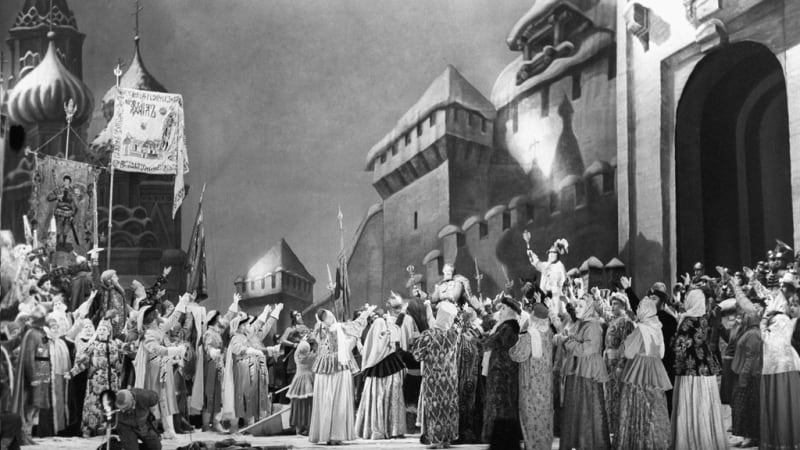
Russia was largely closed to European classical music until the early 18th century, when Peter the Great founded the city of St. Petersburg. Throughout the 18th century and well into the 19th century, Russians imported classical music from the west—they were especially fond of Italian opera. Meanwhile, interest slowly grew in creating a national musical sound and in 1836 Mikhail Glinka wrote A Life for the Tsar, the first through-composed Russian opera (with no spoken text between musical numbers). Glinka was revered by generations of composers after him for establishing a folk-influenced Russian sound in opera and symphonic music. He also wrote a fair bit of chamber music but his reputation mainly rests on his larger works—Russian music had a ‘go big or go home’ aesthetic during the 19th century.
THE BEGINNING OF RUSSIAN CHAMBER MUSIC
The rise of Russian classical music coincided with the rise of nationalism. In St. Petersburg, The Five (also called the Mighty Handful or kuchka) was a group of composers without conservatory training who eschewed abstract, academic-sounding music, including most chamber music, which they derided as too cosmopolitan. They tended toward folk-inspired music.
That folk music springs straight from nature and that Russian music “can be breathed in with the Russian air” is a 19th-century idea. Folk music seemed a world apart from everything that European art music stood for. It went without saying that the two should be considered fundamental opposites, their difference reduced to the simple distinction between nature and culture.
-Francis Maes, A History of Russian Music
This perceived difference between folk music and art music perhaps explains why it was quite a while until Russian chamber music really began to flourish. Aside from some isolated pieces by the likes of Balakirev and a number of works by Anton Rubinstein that didn’t get long-term traction, there wasn’t much major Russian chamber music until the 1870s, when The Five began to break up. One member, Borodin, wrote two string quartets between 1775 and 1881. Over in Moscow, Tchaikovsky, who wasn’t one of The Five, wrote three quartets in the 1870s. The string quartet was a foreign genre in Russia and Borodin reached back to the most famous quartet composer of all time to find a way forward—his First Quartet was subtitled “Inspired by a Theme of Beethoven.” His Second Quartet, which has become much more famous than his first, ends with a finale that has a tentative opening reminiscent of the finale of Beethoven's last quartet, Op. 135 (Borodin's finale begins at 20:36 in the video below).
THE TRIO ÉLÉGIAQUE TRADITION
The 1880s and 90s saw the start of a new, uniquely Russian chamber music tradition: the trio élégique. In 1881 Nikolai Rubinstein, brother of Anton Rubinstein and a major mentor to Tchaikovsky, died. Tchaikovsky decided to honor the pianist Rubinstein with a piano trio so he could feature Rubinstein’s instrument. Tchaikovsky’s trio apparently had a huge influence on later composers because Rachmaninov wrote two memorial trios, the second to honor Tchaikovsky himself after his death in 1893. Arensky and Shostakovich also wrote piano trios in memory of artists they admired.
REVOLUTION AND PIANO QUINTETS
In 1905, things began to change in Russia as major unrest swept the country. The tsarist government was able to quell the revolution but the discontent that remained ultimately led to the successful revolution of 1917. The 1905 revolution greatly influenced musical life, especially in the conservatories. Composer Sergei Taneyev resigned from the faculty of the Moscow Conservatory in 1905 in solidarity with protesting students. Up to that time, none of his chamber works had included his instrument, the piano, but after he gave up steady employment he completed three chamber works with substantial piano parts. Performing was the quickest way to earn money and touring was a possible route out of the country, should that become necessary. The monumental Piano Quintet is the last of Taneyev’s three chamber works for his instrument and has the most massive piano part. Thirty years later, Shostakovich, who also played the piano, wrote his Piano Quintet for similar reasons: Stalin’s mass murders of the 1930s and the start of World War II probably made the ability to travel more desirable. Neither composer ever moved abroad but the instability that started in 1905 forced composers to think in a more independent-minded, entrepreneurial fashion.
SHOSTAKOVICH’S STRING QUARTETS
When chamber music wasn’t serving as a literal escape, it could become a figurative escape. Shostakovich, one of the most celebrated composers in the relatively short history of the Soviet Union, suffered official denunciations from Stalin’s government in 1936 and 1948. After the 1936 warning, which described his opera Lady Macbeth of the Mtsensk District as ‘cheap clowning,’ he turned to abstract instrumental music, writing the first of his 15 string quartets two years later. Shostakovich’s quartets are a personal exploration of deep, often dark themes. Even after the start of Khrushchev’s thaw in the 1950s, Shostakovich still struggled. By the end of the decade his health was in decline. Despite Khrushchev’s reforms, Shostakovich was still beholden to him and, under pressure, he joined the Communist party, something that it’s believed he felt intensely ashamed of. He wrote his Eighth Quartet in response to his health crisis and his continued political and economic vulnerability. It’s one of his most personal works, and contains some of his darkest writing—it was played at his funeral, 15 years after he wrote it.
Russians pack a ton of passion and drama into their chamber music. Though it is sometimes eclipsed by music for larger, flashier ensembles, Russian chamber music tells a story of its own. The history of this music is as complicated as the history of the country itself but it reveals a uniquely personal, deeply emotional aesthetic that is sometimes overlooked in Russian music.
Article by Laura Keller, Editorial Manager.


